How to Build a Marketplace Web App: The Two-Sided Platform Playbook
Learn how to build a marketplace web app from scratch. This engineering and product playbook covers tech stacks, Stripe Connect, cold-start tactics, and costs.

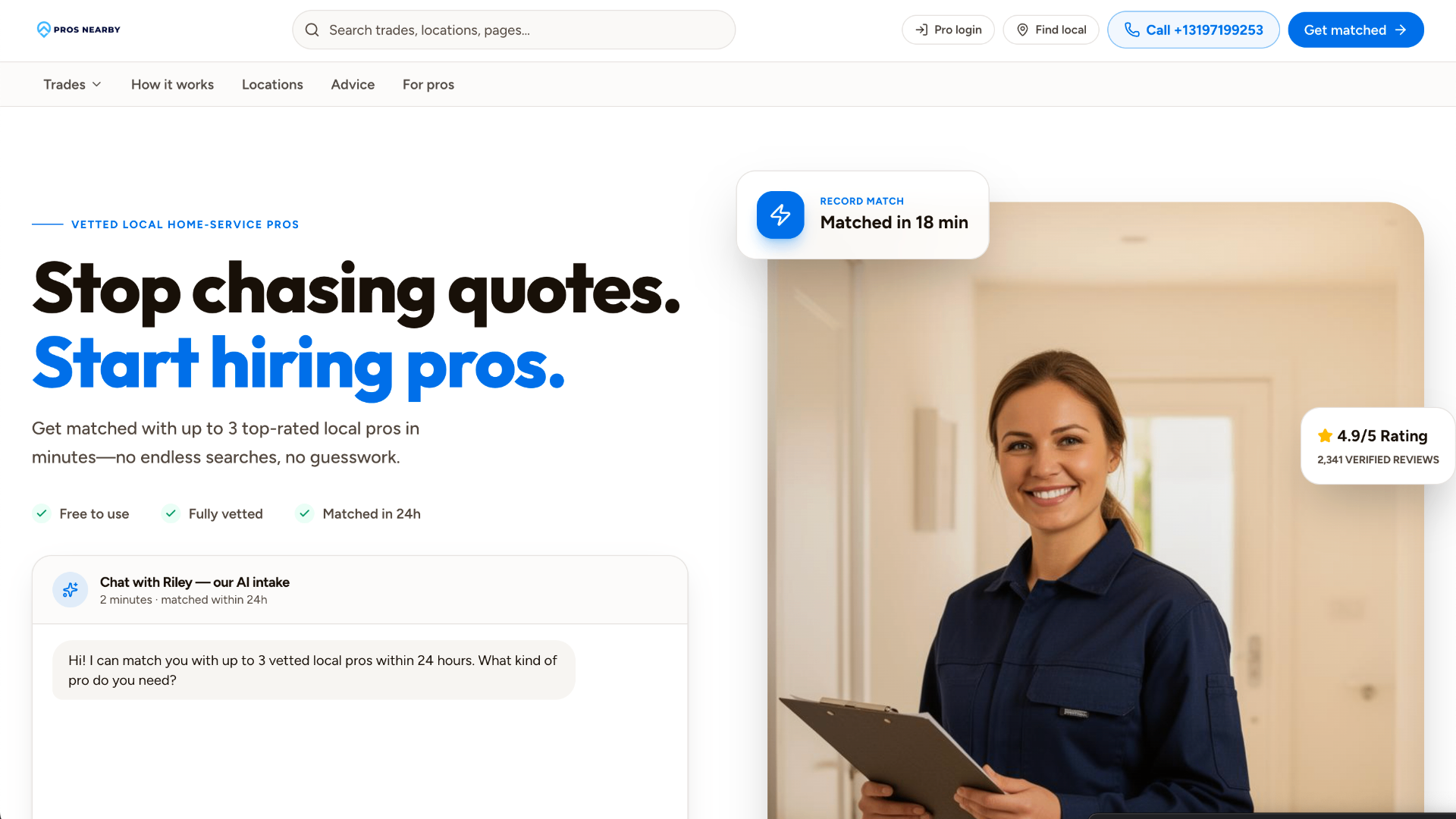
Building a two-sided marketplace is one of the most lucrative yet operationally brutal models in modern software. When Airbnb, DoorDash, and Upwork hit escape velocity, their defensibility becomes near-impenetrable due to network effects. However, getting there requires solving complex software engineering and product puzzles: dual user onboarding, multi-party ledger payments, discovery matching, real-time messaging, and fraud prevention—all while neither side of the market has liquidity on day one.
If you want to know how to build a marketplace web app that actually handles real transaction volume, off-the-shelf templates rarely survive first contact with real users. You need a platform engineered for trust, low friction, and scale.
This guide breaks down the complete architecture, engineering stack, compliance requirements, timeline, and cost realities of shipping a custom marketplace platform in 2025.
The Anatomy of a Two-Sided Marketplace
A marketplace does not sell products or services; it sells coordination and trust. Unlike traditional SaaS, where value flows linearly from your database to a paying seat, a marketplace creates value by enabling transactions between independent supply (vendors, hosts, freelancers) and demand (buyers, renters, clients).
Demand vs. Supply Dynamics
Every marketplace has a "constrained" side—the side that is significantly harder to acquire and retain. In ride-sharing or food delivery, supply is usually constrained (you always need more drivers). In luxury equipment rentals or bespoke B2B procurement, demand is typically constrained (suppliers sit idle waiting for high-value enterprise buyers).
Your software architecture must bend toward your constrained side:
- If supply is constrained, your vendor onboarding flow must take under three minutes, automate KYC verification, and offer zero-friction payout tooling.
- If demand is constrained, your consumer search, filtering, social proof, and checkout UX must be faster and cleaner than buying on Amazon.
Solving the Chicken-and-Egg Cold Start Problem
Software cannot fix a zero-liquidity marketplace, but architectural decisions make solving the cold start problem significantly easier. Successful founders engineer "single-player mode" directly into their app:
- Provide Standalone Utility to Supply First: Give suppliers a free, high-utility tool (e.g., an inventory management portal, booking calendar, or invoicing generator) before demand exists. When demand arrives, your catalog is already stocked.
- Constrain Geography or Category Geometries: Do not launch nationwide. Limit your app to a single metropolitan zip code or a hyper-specific vertical (e.g., camera gear rentals in Austin, Texas). This concentrates liquidity so match rates exceed 80% instead of 2% spread thin across the country.
- Programmable Fake Demand/Concierge Flow: Build an internal administrative module that allows your operational team to manually source and fulfill transactions on the backend while the frontend maintains the illusion of autonomous platform matching.
Core Architectural Modules Every Marketplace Needs
A resilient two-sided marketplace requires six foundational micro-modules. Cut corners here, and you will spend six figures untangling technical debt within six months.
+---------------------------------------------------------------------+
|                   TWO-SIDED APPLICATION LAYER                       |
|     [ Buyer Web App (Next.js) ]    [ Vendor Portal / Mobile App ]   |
+---------------------------------------------------------------------+
                                  | REST / GraphQL / WebSockets
+---------------------------------------------------------------------+
|                        CORE API GATEWAY                             |
+---------------------------------------------------------------------+
       |                   |                     |              |
+---------------+  +-----------------+  +----------------+  +---------+
| Auth & KYC    |  | Search & Match  |  | Split Payments |  | Chat &  |
| (Supabase/JWT)|  | (Postgres/vector|  | (Stripe Connect|  | Audit   |
| Persona/Stripe|  |  + Algolia)     |  |  Custom/Expr.) |  | Stream) |
+---------------+  +-----------------+  +----------------+  +---------+
Multi-Tenant Auth and Identity Verification
Your data schema must separate authentication from actor personas. A single user entity in your database will frequently act as both a buyer and a seller over its lifecycle.
-- Core relational schema separating credentials from platform roles
CREATE TABLE users (
    id UUID PRIMARY KEY DEFAULT gen_random_uuid(),
    email VARCHAR(255) UNIQUE NOT NULL,
    password_hash VARCHAR(255) NOT NULL,
    created_at TIMESTAMPTZ DEFAULT NOW()
);

CREATE TABLE vendor_profiles (
    id UUID PRIMARY KEY DEFAULT gen_random_uuid(),
    user_id UUID REFERENCES users(id) ON DELETE CASCADE,
    business_name VARCHAR(255) NOT NULL,
    stripe_account_id VARCHAR(255),
    is_verified BOOLEAN DEFAULT FALSE,
    payouts_enabled BOOLEAN DEFAULT FALSE
);

CREATE TABLE customer_profiles (
    id UUID PRIMARY KEY DEFAULT gen_random_uuid(),
    user_id UUID REFERENCES users(id) ON DELETE CASCADE,
    shipping_address JSONB,
    stripe_customer_id VARCHAR(255)
);
For high-trust platforms (e.g., home services, healthcare, luxury rentals), integrate third-party automated identity verification like Persona or Stripe Identity directly into the vendor registration pipeline before granting listing permissions.
Catalog Indexing and Faceted Search
Marketplaces live and die by time-to-discovery. Standard SQL LIKE '%query%' queries will bring your database to a halt once your catalog passes 5,000 items with dynamic availability.
Implement a dedicated search indexing layer:
- PostgreSQL with
pgvectoror Full-Text Search (TSVECTOR): Ideal for MVPs. Avoids external infrastructure while handling geo-distance calculations via PostGIS. - Meilisearch or Algolia: Essential for consumer-grade auto-complete, instant filtering across dozens of facet dimensions (price, distance, rating, availability dates), and typo-tolerant search.
Payments, Escrow, and Split Transactions with Stripe Connect
Never handle marketplace funds directly unless you hold a money transmitter license. The gold standard for marketplace payments is Stripe Connect.
You must select the correct account type based on your operating model:
- Standard Accounts: The seller manages their own Stripe dashboard. Minimal compliance overhead for you, but disjointed branding and limited control over the checkout experience.
- Express Accounts: Stripe handles white-labeled identity verification (KYC/KYB) and tax document generation (1099-K), while you control the platform fees and checkout UI.
- Custom Accounts: Complete white-label control. You own the onboarding, dashboard, and support. However, your platform assumes full financial liability for chargebacks, fraud, and compliance risks.
The Destination vs. Separate Charges & Transfers Flow: For most platforms, use Destination Charges with holding periods. The buyer pays your platform, Stripe takes your take rate (e.g., 15%), and automatically routes the remaining 85% to the vendor's connected account on a delayed transfer trigger (e.g., after the physical booking or delivery is marked complete).
In-App Messaging and Disintermediation Defenses
Platform leakage (buyers and sellers taking the transaction offline via phone, Venmo, or cash to avoid your 10–20% fee) kills unit economics. Your messaging system must balance trust-building with leakage prevention:
- Build real-time messaging using WebSockets, Supabase Realtime, or Stream Chat.
- Run automated regex filters and natural language models (LLMs) on outbound chat messages to scrub phone numbers, email addresses, and terms like "Zelle", "Venmo", "cash", or "wire".
- Mask contact info until a booking deposit or milestone payment is confirmed within the app.
At Envert, we routinely architect these protective layers for custom marketplaces, ensuring transaction integrity and automated escrow releases are built directly into the core event-driven infrastructure.
Recommended Tech Stack for a Scalable Marketplace
Do not over-engineer an unvalidated idea into a labyrinth of microservices. Your goal is high shipping velocity paired with a robust relational database.
| Layer | Recommended Technology | Why It Wins for Marketplaces |
|---|---|---|
| Frontend | Next.js (React), Tailwind CSS | SSR/SSG for SEO-heavy catalog pages; blazing-fast client transitions. |
| Mobile App | React Native (Expo) | Shared business logic and payment state with your web app; 90%+ code reuse. |
| Backend | Node.js (TypeScript) / NestJS or Go | Type-safety end-to-end; seamless payload sharing across interfaces. |
| Database | PostgreSQL (Supabase / Neon / RDS) | Relational integrity for transactions, ACID compliance, PostGIS geo-queries. |
| Search Engine | Meilisearch or Algolia | Instant sub-50ms faceted filtering and geo-radius discovery. |
| Payments | Stripe Connect (Express) | Automated compliance, global tax routing, multi-party payout ledgers. |
| Notifications | Knock / Twilio / Resend | Unified event triggers for push notifications, SMS booking updates, transactional emails. |
Frontend and Mobile Architecture
Marketplaces require rapid public indexing. If your public listings rely entirely on client-side rendering (SPA), Google will struggle to index your catalog, cratering your organic acquisition. Use Next.js with Server-Side Rendering (SSR) or Incremental Static Regeneration (ISR) so thousands of dynamic listing pages are pre-rendered, crawlable, and lightning-fast.
Backend, Database, and Real-Time Infrastructure
Want this shipped, not just read about?
Book a free scoping call. We'll map the smallest billable wedge of your idea and tell you honestly if we're the right team to build it.
Book a free scoping callSee what we've shipped →
PostgreSQL is non-negotiable. Relational integrity prevents catastrophic marketplace glitches, such as double-booking an apartment or reserving the same rental tool twice at the exact same millisecond. Use database row-level locking (SELECT ... FOR UPDATE) during the checkout transition to guarantee inventory consistency under concurrent user load.
Development Timeline and Realistic Cost Breakdown
Founders consistently underestimate the time and capital required to build a two-sided marketplace because they view it as one application. In reality, you are building three distinct applications:
- A high-converting consumer discovery and checkout portal.
- A robust vendor portal with listing management, scheduling, and payout tracking.
- An internal back-office administration tool for dispute handling, listing moderation, and refund authorizations.
Phase-by-Phase 14-Week Roadmap
[Weeks 1-2] Discovery, Systems Architecture, and Database Schemas
     |
[Weeks 3-5] Core Data Models, Multi-Tenant Auth, and Public Catalog
     |
[Weeks 6-8] Search Engine Integration, Booking Engine, and Availability States
     |
[Weeks 9-11] Stripe Connect Integration, Messaging, and Notification Infrastructure
     |
[Weeks 12-13] Admin Portal, Content Moderation, and End-to-End Stress Testing
     |
[Week 14] Staging Verification, Production Deployment, and Soft Launch
- Weeks 1–2 (Discovery & Architecture): Technical specs, UX wireframing, edge-case mapping (cancellations, disputes, partial refunds), and PostgreSQL entity-relationship modeling.
- Weeks 3–5 (Core Infrastructure): User roles, vendor profile creation, media ingestion pipelines (S3 uploads with automated optimization), and basic listing management.
- Weeks 6–8 (Search & Availability Engine): Time-slot availability calendars, faceted search queries, geo-distance tracking, and reservation locks.
- Weeks 9–11 (Transactions & Communication): Stripe Connect webhooks, authorization holds, payout batching, and filtered real-time chat.
- Weeks 12–13 (Admin Console & Security): Platform oversight tools, dispute resolution mechanics, listing approval workflows, and audit logging.
- Week 14 (Hardening & Launch): Penetration testing, automated end-to-end tests (Playwright), load testing concurrent bookings, and production deployment.
Budget Realities: MVP vs. Production Scale
How much does it realistically cost to build a custom two-sided marketplace?
- No-Code Prototype (Bubble / Softr / Sharetribe): $8,000 – $20,000. Suitable for initial concept testing, but frequently breaks down when dealing with complex split payments, high API customization, or proprietary search algorithms.
- Production-Grade Custom MVP (US-Based Software Studio): $45,000 – $90,000. Full-stack engineering, custom UI/UX, bulletproof Stripe Connect split payments, automated notifications, and an admin suite built on clean TypeScript/React/PostgreSQL. This is the sweet spot for funded startups or established operators needing a reliable foundation.
- Enterprise / Scaled Platform: $120,000 – $250,000+. Native iOS/Android apps, complex AI-driven matching algorithms, real-time logistics tracking, automated localized sales tax calculations across multi-jurisdiction boundaries, and enterprise SOC-2 compliance.
At Envert, we work with founders to cut through non-essential features and ship lean, high-performance marketplace MVPs in 10 to 14 weeks. Because we operate as an end-to-end, US-based product and engineering studio, you avoid the communication friction and architectural technical debt that frequently plagues offshore or agency-hopping builds.
Operational Landmines: Compliance, Tax, and Platform Leakage
Many founders build functional software only to be blindsided by legal and operational landmines. Address these three architectural vectors before processing your first dollar:
1099 Contractor Rules and Payout Compliance
If your platform connects consumers with individual service providers (cleaners, mechanics, tutors), you must avoid misclassifying them as W-2 employees. The legal test often hinges on control:
- Do not dictate their exact work hours or uniforms.
- Ensure your software allows vendors to set their own pricing or reject bookings without punitive algorithmic penalties.
- Automate tax documentation collection (W-9 / W-8BEN) during vendor onboarding. Stripe Connect Express handles 1099-K filings at tax season, lifting an immense regulatory burden off your back-office team.
Marketplace Facilitator Tax Laws
In most US states and international jurisdictions, you cannot simply pretend you are "just a software tool connecting two parties." Under Marketplace Facilitator Laws, the state holds the marketplace operator responsible for calculating, collecting, and remitting sales tax on transactions between third parties.
Integrating automated sales tax engines like Stripe Tax or TaxJar directly into your transaction flow is mandatory. These tools inspect both the physical location of the buyer and the vendor, apply jurisdictional rates, and produce reconciliation reports automatically.
Off-Platform Leakage (Disintermediation)
Suppliers will always attempt to exchange WhatsApp numbers or hand physical business cards to clients to dodge your commission. Software defenses alone cannot stop 100% of leakage, but platform incentives can drop it significantly:
- Provide Escrow and Invoicing Protections: Ensure buyers know that transactions completed off-platform forfeit all refund protections, insurance policies, and platform guarantees.
- Gamify Vendor Tiering: Tie search rank visibility, fee discounts, and faster payouts directly to in-platform transaction volume.
- Incentivize Repeat Booking Utility: Give clients tools they cannot replicate on cash or Venmo (e.g., instant one-click reordering, shared corporate expensing, automated work logs, compliance certificates).
Build vs. Buy: No-Code Templates vs. Custom Engineering
Founders frequently debate whether to launch on a turnkey platform like Sharetribe or build a custom web app from day one.
                    [ Marketplace Decision Matrix ]
                                   |
        Is your workflow 100% standardized (simple catalog/rental)?
                     /                            \
                   YES                             NO
                   /                                \
         [ Use Sharetribe / Bubble ]       Is proprietary matching, custom
         Validate liquidity in 30 days.    escrow, or native UX critical?
                                                   /              \
                                                 YES              NO
                                                 /                 \
                          [ Custom Engineering: Envert ]    [ White-Label ]
When No-Code (Sharetribe/Bubble) Makes Sense
If your business model mirrors standard rental equipment or straightforward service bookings without unique matching logic, a no-code tool can validate buyer demand in your local market for under $10,000.
However, you will hit architectural walls quickly:
- You cannot run custom transaction states (e.g., milestone approvals with multi-part escrows).
- Mobile performance degrades as complex relational database queries trigger API timeouts.
- Platform fees compound rapidly, and you do not own the underlying IP, making serious VC or private equity due diligence difficult down the line.
When You Need a Custom Engineered Platform
Custom software development is essential if your marketplace requires:
- Proprietary matching algorithms or dynamic, auction-based pricing engines.
- Tight, custom-designed mobile applications for service providers working in the field.
- Specialized enterprise procurement workflows, multi-seat accounts, and net-30 invoicing.
- High-speed geographic faceted search with real-time driver/service provider location telemetry.
If your software is your core asset and strategic moat, owning every line of your codebase and database schema is the only sustainable choice.
The Liquidity Playbook: Measuring What Matters Post-Launch
Once your marketplace web app is deployed, ignore vanity metrics like total registered users or app downloads. These metrics will lie to you. Two-sided marketplaces live and die by liquidity ratios.
Track these four operational telemetry signals:
- Search-to-Fill Rate (Buyer Liquidity): What percentage of search sessions result in a successful booking or checkout? If 100 people search for a service and only 3 find an available vendor, your supply is inadequate in that category or geography.
- Time to First Transaction (Seller Liquidity): How many days elapse between a vendor completing KYC onboarding and receiving their first paying booking? If this stretches beyond 14 days, your churn rate on the supply side will skyrocket.
- Gross Merchandise Volume (GMV) vs. Net Revenue: Track your take rate rigorously. A $1,000,000 GMV marketplace with a 5% take rate earns $50,000 in gross profit before server costs and payment processing fees. Make sure your gross margin accommodates customer acquisition costs (CAC).
- Cohort Repeat Rate: Do buyers book again in month two, three, and six? High-performing platforms retain at least 25–40% of their buyer cohorts at the six-month mark.
Building a custom marketplace requires coordinating payments, trust protocols, clean relational schemas, and responsive user experiences across multiple device types. Getting the architecture right from day one is the difference between launching a compounding network effect and wrestling with unmaintainable spaghetti code.
Ready to Build Your Custom Marketplace Platform?
If you are planning to launch a two-sided marketplace, navigating the architecture—from Stripe Connect multi-party payouts to sub-second search indexing—can feel overwhelming. At Envert, we partner with startup founders and growth-stage operators to design, build, and deploy production-grade web applications, mobile apps, and custom platforms from the ground up.
Our US-based team of senior product engineers, UX designers, and technical architects handle everything end-to-end: system design, frontend and backend development, payment integrations, and cloud deployment.
Book a free technical scoping call with Envert today to discuss your marketplace architecture, timeline, and budget.
Frequently asked questions
How long does it take to build a custom marketplace web app?+
A production-grade, custom marketplace MVP typically takes between 10 to 14 weeks to design, develop, and launch. This includes multi-tenant authentication, catalog discovery with faceted search, Stripe Connect integration, in-app messaging, and a back-office administration console.
How much does it cost to build a marketplace app with custom software development?+
A robust, custom-engineered marketplace MVP built by a dedicated US-based studio usually costs between $45,000 and $90,000 depending on workflow complexity, mobile requirements, and compliance integrations. Enterprise platforms with native mobile apps and complex AI matching can exceed $120,000.
Which Stripe Connect account type is best for a two-sided marketplace?+
For most early-stage and growth marketplaces, Stripe Connect Express is the ideal balance. Express offloads regulatory KYC/KYB identity verification, banking compliance, and automated 1099 tax reporting onto Stripe while allowing you to retain full control over your platform take rates and frontend checkout UI.
How do you prevent platform leakage in a marketplace?+
Mitigating off-platform transactions requires combining software controls and platform incentives. Implement automated regex filters on in-app messaging to scrub phone numbers and payment handles, but more importantly, offer value suppliers cannot get off-platform—such as escrow protections, insurance, automated invoicing, and search ranking boosts for completed in-app bookings.
Can I build a successful marketplace with no-code tools like Sharetribe or Bubble?+
No-code tools work well for rapid proof-of-concept testing within standard, uncustomized workflows. However, once you require unique matching logic, proprietary pricing algorithms, sub-second faceted geo-search, or custom escrow release milestones, you will hit architectural limits that necessitate rebuilding as custom software.